-

Blessing at St. Andrew in Tržič - Photographic library of the Museum of Gorenjska
-

Easter food blessing in Šmarca - Archives of the Slovene Ethnographic Museum, author: Peter Naglič
-

Blessing in Spodnja Lipnica in Alenčeva inn - Photographic library of the Museum of Gorenjska
-

Blessing in Spodnja Lipnica, children in front of Alenčeva inn - Photographic library of the Museum of Gorenjska
-

Girls taking baskets to the blessing, Planina pod Golico - Photographic library of the Museum of Gorenjska
-

After the food blessing - Archives of the Slovene Ethnographic Museum, author: Fran Vesel
-

“Frightening God” by pounding boxes and crates and making noise - Archives of the Slovene Ethnographic Museum, author: Slavko Smolej
-

“Frightening God” with rattles on Good Friday - Archives of the Slovene Ethnographic Museum, author: Slavko Smolej
-

Holy Easter fire - Archives of the Slovene Ethnographic Museum, author: Slavko Smolej
-

Dying Easter eggs in Šenčur - Archives of the Slovene Ethnographic Museum
-

Easter in Šenčur - Archives of the Slovene Ethnographic Museum
-

Easter food blessing - K. Klinar and P. Japelj
-

Šlibar farm - Pija Japelj
-

Šlibar family - Pija Japelj
-

Picking plants to be used for decorating Easter eggs - Pija Japelj
-

Placing Easter eggs in tights - Pija Japelj
-

Easter eggs that will be cooked in onion peels - Pija Japelj
-

Onion peels - Pija Japelj
-

Dying Easter eggs in red wine - Pija Japelj
-

Easter eggs symbolise drops of Christ’s blood - Pija Japelj
-

Meat symbolises the body of Christ - Pija Japelj
-

Pastry (Potica cake) symbolises Christ’s throne - Pija Japelj
-

Horseradish symbolises nails, and oranges symbolise the sponge dipped in vinegar - Pija Japelj
-

Prepared Easter food to be placed in the basket - Pija Japelj
-

The youngest members of the family help preparing for the Easter blessing - Pija Japelj
-

Placing Easter food in the basket - Pija Japelj
-

The basket is covered with a special tablecloth - Pija Japelj
-

Basket containing Easter delicacies - Pija Japelj
-

Leaving for the blessing at Kovor parish church - Pija Japelj
-

Kovor parish church viewed from Šlibar farm - Pija Japelj
-
1930

1935

1937


1939


1940


1987


2019



Easter food blessing
(velikonočni žegən, velikonočni blagoslov, žegən)
Easter is the most important Christian festival. It celebrates Jesus Christ's resurrection from the dead. Easter Triduum, seen as preparation for the festival, is celebrated before Easter. It includes Holy Thursday, Good Friday and Holy Saturday. Various customs and traditions accompany the festival. One of them is the Easter food blessing that takes place on Saturday. During the Good Friday ceremony and the evening mass on Holy Saturday church bells are kept silent in some areas of Slovenia (including in Tržič) and rattles are used by young men.
Blessing of fire takes place in the morning on Holy Saturday. Many people collect fire that is taken to houses using lightly burning tree fungi. This fire is then used to cook food that will be taken to church for the Easter blessing. The Easter food blessing is mostly attended by housewives that are sometimes accompanied by their children. The food is carried to church in special Easter baskets. Baskets are covered with a special table cloth, only used for this festival. A lamb with a flag and/or the IHS monogram is usually embroidered on the table cloth.
Meat, Easter eggs, horseradish, Potica cake, and sometime bread are placed in the basket. Each of these foods has a symbolic meaning. Meat symbolises the body of Christ, Easter eggs symbolise Christ’s Blood or grave (due to the shell in which life resides), horseradish represents Christ’s nails because of its shape or, more symbolically the suffering, and round Potica cake symbolises Christ’s crown of thorns. In some places wine and oranges are also added; wine symbolises the blood of Christ and an orange symbolises the sponge that was dipped in vinegar and given to Jesus to drink. These days sweets (chocolate eggs, chocolate, candy, etc.) are also added. Farmers used to add bread and salt for their livestock.
All housework, in the house and outside, is forbidden on Holy Saturday; only smaller tasks such as sweeping are allowed. This was even more true in the past. Even brushing cattle was not allowed.
Festive processions and masses take place on Easter. The blessed food is eaten on the same day after the Easter mass with the procession. Some people only keep blessed food on their tables while others add something else.
HISTORICAL-ANALYTICAL NOTES
Blessings appeared in various forms. In the Christian tradition, Easter blessing is the most important one of all. It refers to the blessing of food that is relevant for celebrating Easter. The celebrations on Holy Saturday used to start in the evening like on the other days in the Holy Week, but eventually this was brought forward to noon and later to the morning. A strict lent was observed until the morning, if not until noon on Holy Saturday. (Kuret, 1989)
Holy Saturday begins with the blessing of fire that takes place in the early morning hours. In addition to fire, the priest also blesses a few grains of incense that is then used for the blessing of the candle. Young people used to be present for the blessing of fire. They were the ones who carried fire to people’s homes. They set off to church early in the morning. Each carried their own tree fungi. It was put in embers and once it got ignited, they took it home. This blessed fire was then used to start fire in people’s homes and sometimes, as we were told, food that was taken for the blessing in the afternoon was cooked over that fire. Since most people use electric stoves today, this no longer happens.
The Easter blessing in Slovenia has not changed much since the 17th century when it was described by Janez Vajkard Valvasor. There are, however, regional differences. The basis for foods to be blessed is the same in all regions. All baskets contain pastry (it can be Potica cake, bunt cake, white bread), meat (gammon, sausages, shoulders), eggs and horseradish. (Kuret, 1989: 194)
Kuret states that the Easter celebrations begin after lunch, at noon, on Holy Saturday. The young used to start celebrating sooner. After the young men completed their task of bringing home blessed fire, they used to gather and played a special game with Easter eggs. The game consisted of tossing coins at Easter eggs with the objective to get the coin to stuck in the egg.
Housewives used to carry the food to be blessed in baskets called “jerbas”. “Jerbas” is a round basket with a flat bottom. Some had smaller handles on the side. The content also varied slightly. Housewives used to carry “Jerbas” baskets on their heads. Bread and salt for livestock was often added to the basket. This was done by farmers since they believed that the livestock would also be blessed if it was fed blessed bread. Animals were considered part of the family.
Various customs were also part of the Easter festival. Unmarried girls ran home after the blessing since they believed that the girl who reached her home first, would get married first. In Jesenice, young boys collected boxes and wooden crates so that they could pound on them to make noise to “frighten God”. Pieces of wood were then prepared for fire that was started on Easter morning for the blessing of fire. None of the informers remembers such practices, but we have photographic evidence showing this. The tradition of using rattles has been preserved in Tržič. Young boys walk along the streets and use the rattle to announce a call to prayer while the church bells are kept silent. This was performed more often in the past.
LEARNING AND TRANSMISSION
The transfer of traditions to the younger generations is very important. The blessing is passed on within families, the symbolism of foods and the blessing ceremony itself is passed on by the Church - via religious education. The transfer to the younger generations is mainly ensured by including children in such activities and by example where children imitate their parents.
COMMUNITY
The Easter blessing ceremony is attended by Kovor residents. The preparations for the event take place in their homes, and the blessing itself takes place at the St. John the Baptist parish church in the said village. Women play the biggest part in the blessing since they prepare the food at home and then bring it to church. Children also play an important role since they help preparing the food - usually by dying and decorating the Easter eggs. Thus, the preparation is preserved by the local community in the form of individual family communities, and the ceremony is preserved by the Church. Even people that (no longer) believe in God or go to church have preserved this tradition and attend church for the blessing. Elsewhere in Slovenia the Easter blessing is preserved by local communities within family circles, and the Church acts as the promoter.
PROMOTIONAL ACTIONS
The parish and the parish priest are those who ensure that the blessing takes place each year. The number of people attending the blessing is neither decreasing neither increasing. The blessing is attended by people from different age groups.
PROTECTIVE MEASURES
Since 2009, a centre for arts and craft, Center domače in umetnostne obrti Veržej, has organised an exhibition of Easter eggs from different Slovenian regions. In 2019 the exhibition also included Easter tablecloths. The event emphasises the importance of individual elements related to the Easter blessing.
The Easter blessing is not formally protected so no safeguarding measures are implemented.
Related Intangible Heritage
To learn more
Web Sites
Bibliography
Velika noč na Slovenskem
Družina 1990
Praznično leto Slovencev: Starosvetne šege in navade od pomladi do zime
Družina 1989
Velika knjiga o praznikih: Praznovanje na Slovenskem in po svetu
Domus 1994
Praznovanje pomladi in velike noči na Slovenskem in po svetu
Modrijan 2010
Etnolog 17 - Žegnanja v slovenski pravni zgodovini
Slovenski etnografski muzej 1944
Material resources
In Kovor, the Easter blessing ceremony takes place in the St. John the Baptist parish church. The church was built around 1740 in Baroque style. It was later modified, and today’s architecture dates back to 1840. This element is listed in the Slovenian Register of the Intangible Cultural Heritage (EDŠ 1918). The church serves as the centre of the parish.
Produced by
RAGOR - Razvojna agencija Zgornje Gorenjske - Ambroz Cerne
Scientific Advisor
Pija Japelj, student of ethnology and cultural anthropology
Release Date
19-JUL-2019 (Ambroz Cerne)
Last update
22-SEP-2019 (Agostina Lavagnino)
Tweet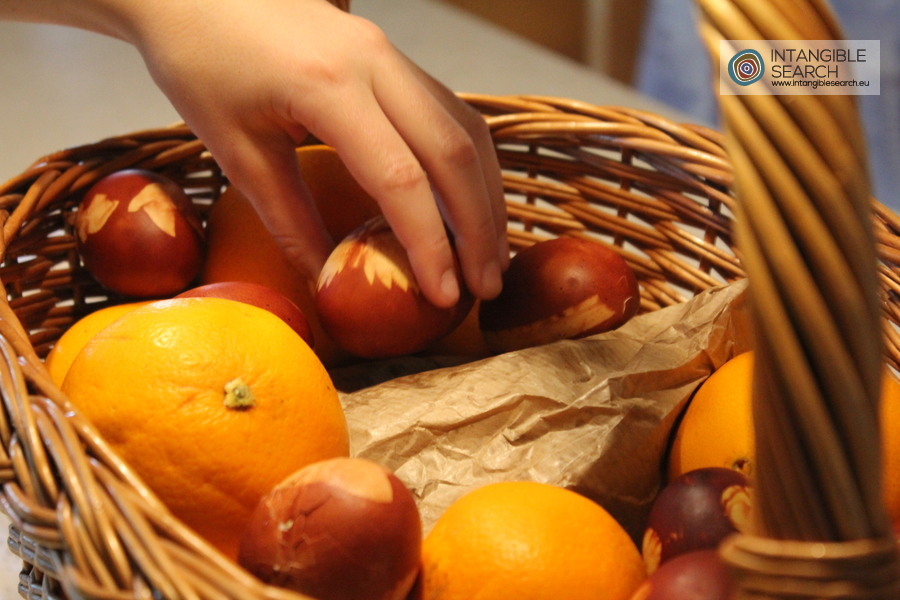
From Community
Tell us about it