-

Raccolta e utilizzo spinacio selvatico - Intervista - Michele Trentini
-
Raccolta e utilizzo silene, ortica, spinacio selvatico - Intervista - Michele Trentini
-

Spinaci selvatici - Gaetano Mangiameli
-

Spinaci selvatici - Gaetano Mangiameli
-

Spinaci selvatici - Gaetano Mangiameli
-

Spinaci selvatici - Gaetano Mangiameli
-

Spinaci selvatici - Gaetano Mangiameli
-

Spinaci selvatici - Gaetano Mangiameli
-
Spinacio selvatico - Intervista - Michele Trentini
-
2011

2012


Harvest and use of wild spinach in Valchiavenna
(vanga, vench, vanch, spinacio del buon Enrico, erba del buon Enrico, il buon Enrico)
Dialect name: vanga, vench, vanch, spinacio del buon Enrico (literal transaltion: spinach of Henry, the good man), erba del buon Enrico (grass of Henry, the good man), il buon Enrico (Henry, the good man).
Scientific name: chenopodium bonus-henricus.
This plant essentially has two dialect names. The first, represented by the term vanga (literally translated with spade) and its variants, is explained on the basis of a strong resemblance between the shape of the leaf and that of the lower part of the agricultural tool used to work the land.
The second name, which incorporates part of the scientific one, makes reference to the legend according to which King Henry of England, moved to pity by the poverty of his subjects allowed them to enter the royal gardens and pick up this edible plant that was born spontaneously.
The parts of the plants used for food purposes - at home and in restaurants - are the leaves that are an interesting ingredient in the preparation of soups, risottos and salads, and ,when cooked, as side dish.
The plant can be harvested from May to September.
Wild spinach can be preserved by freezing, although many of those who enjoy cooking it prefer to use only the fresh product.
Wild spinach features in soups and can be accompanied by rice and/or by different combinations of the following ingredients: nettles, cuckoo bread (rumex acetosella), susei (silene vulgaris), dandelions, beans, potatoes and chestnuts diluted with water and/ or milk. Wild spinach is used also in risottos and frittatas, mixed with eggs, parmesan cheese and sometimes with ricotta (soft white Italian cheese). Finally, it is perfect as a side dish: parboiled, pan-fried with butter - as for susei and dandelions -or seasoned with oil and salt. The cooking time depends on the harvest period: from half a minute for tender plants harvested in spring, at the beginning of their growth cycle, up to 3-4 minutes for the more mature ones harvested in late summer.
In the past, wild spinach was commonly eaten on the pastures because of the lack of other fresh vegetables.
Some criticisms raised about the concept of 'spontaneous herb' can also apply to wild spinach and this causes problems of classification. Although informers do not hesitate to define spontaneous or wild plants species as wild fennel, thyme, susei (Italian common name for silene vulgaris), and wild spinach too, it should be noted that they are often sown or transplanted in vegetable plots / home gardens. This domestication allows to have them always available for food or phytotherapic uses and other daily necessities. Their inclusion in vegetable plots/ home gardens, however, does not affect the attribution of the adjective 'spontaneous' or 'wild' to plants by experts. For this reason, even knowing that the analysis of practices undermines the dichotomy wild/domestic, it was decided to adopt the concept of 'spontaneous' or 'wild', according to local practice.
LEARNING AND TRANSMISSION
It is necessary to distinguish between learning and transmission of knowledge to the youth and the consolidation of knowledge in adults.
The people interviewed can recall how in their youth they learned by experience, informally, through the example of parents or other adults. Children and youngsters followed the harvesters and listened to their explanations on how to collect the plant.
Even recipes featuring collected herbs were transmitted orally, and learning was direct and based on observation and practice. Not only the native family but also an acquired one contributed to enrich the repertoire of culinary preparations: harvesters often cite their mothers-in-law, along with their own mothers, as a major source of their knowledge.
In adulthood knowledge is consolidated also by reading specific texts on herbs. It is here worth mentioning a volume by Maria Treben, La salute dalla farmacia del Signore: consigli ed esperienze con le erbe medicinali. Attending herbal medicine courses can be another possibility to enrich notions.
It should also be noted that the same interviews conducted for this research have been themselves a moment of transmission of knowledge. The fact that meetings gathered people of different generations meant giving a chance to young people to discover plants properties, to learn new recipes, to listen to anecdotes about the harvesting times. It also meant giving a stage to the elderly who had an opportunity to tell things they never talked about beforehand.
People interviewed on the future are rather pessimistic: children, they explain, are reluctant to go to harvest wild plants and prefer to make use of market produce. As explained by one of the older informers: "I've had five I [children] but nobody was interested. Now people find it easier to go to the pharmacy, take a pill or a syrup, they do not give the right importance to things homegrown."
PROMOTIONAL ACTIONS
One way to get wild spinach known and appreciated, as well as other Valchiavenna, 'wild' or 'spontaneous' plants, is its use in cooking which goes beyond the domestic sphere.
Restaurateurs of the area, in fact - particularly those who run farm houses which serve meals, but also regular restaurants - propose recipes based on wild herbs. This is an intelligent way to promote local products and a trigger for tourism.
To learn more
Produced by
Università Statale di Milano - Dipartimento di Geografia e Scienze Umane dell'Ambiente - Gaetano Mangiameli Cristiana Natali
Release Date
21-NOV-2013 (Gaetano Mangiameli Cristiana Natali)
Last update
24-NOV-2014
Tweet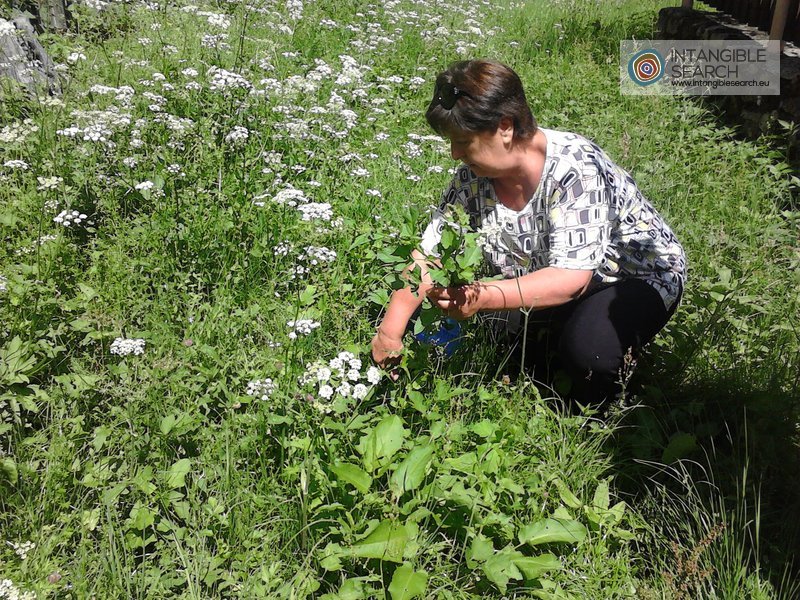
From Community
Tell us about it