-

Raccolta radice di genziana - Michele Trentini
-

Racoolta e utilizzo della radice di genziana - Michele Trentini - Frame video
-
Raccolta e utilizzo della radice di genziana - Michele Trentini
-
Raccolta radice di genziana - Michele Trentini
-
2011


Back to search
Category
Naturalistic KnowledgeTAG
WHERE
Chiavenna (SO), Lombardia - Italy
WHEN
Summer
WHO

Harvest and use of the gentiana in Valchiavenna
Scientific name: Gentiana lutea, Gentiana purpurea;
Common name: yellow gentian, purple gentian, blue gentian;
Diffusion: spread on areas at high altitudes;
Use: the roots, for the preparation of liquors and for the gentian water. Digestive and purifying properties.
Protected species (particularly gentiana lutea).
Harvest frequency: low.
Use frequency: medium.
Gentian root is traditionally harvest and used for the preparation of infusions, liqueurs and for flavoring bitters, grappa(schnapps) and other alcoholic beverages. Its flavor is distinctly bitter. In general natives highly appreciate its strong digestive and healing properties. Its use in food preparations is closely associated with its healing effects. We can mention also a specific use in the pharmacopoeia context. With full rights it is considered a medicinal plant. Actually two different varieties of this plant are locally used. They can be told apart from the color of their flowers: the yellow gentian and the purple one. The first is the Gentiana lutea, whose common name is Great Yellow Gentian. The second is the Gentiana purpurea, usually known as Purple Gentian. Both species are rigorously protected and they are included by specific regional Laws in the list of wild flora protected species. Gentiana lutea is rare and it can be found in Valchiavenna, but only in some specific areas at high altitudes (generally in calcareous and low-humidity soils). The location of these areas is not commonly known; it can be said that mountain pastures are yellow gentians habitat. Gentiana purpurea is more common, widespread in mountains areas at high altitude.
Because of its area of distribution, harvesting is carried out only in summer. The plant has deep and branched roots which are exactly the part people use of the plant. Its harvesting is a complex activity and few people know how to do it properly. First of all you have to recognize the plant, which is not such an obvious business. Experts alone can tell them apart from similar plants. For example, its leaves are very similar to the Veratrum album (White Helleborine) , a well-spread plant on the Alpine pastures which is very toxic both for men and animals. The harvest continues with the choice of the plant, according to its age.
The root extraction occurs by digging around the plant and pulling it upwards (increasingly isolating the root from the surrounding soil) taking the utmost care not to break the root. In case of breakage it becomes much more difficult and in some cases impossible to recover the portion of root left in the ground. However, it is known that the torn roots, when left in the ground, can generate other plants. The entire removal operation can take several minutes.
The harvest of gentians has long been regulated (especially Gentiana Lutea) and it is currently prohibited. This factor, in addition to the laboriousness of the harvest, makes this activity, the preparation and the use of products based on gentians not too widespread. The consumer reports a particularly bitter taste: for some people this is an element of reject, for others of attraction and uniqueness. The bitter taste is associated with the beneficial properties of the plant. In the past -much less now- the root was used for the preparation of the gentian water, prepared by maceration and then stored in bottles. Small doses were taken regularly, especially in the morning on an empty stomach, because of its purifying and restorative functions.
Nowadays it is more frequently used to prepare liqueurs and grappa. While for the latter the procedure is simple and relatively uniform (the root is left in grappa for about twenty days), liquors featuring gentians entail a wide variety of recipes and methods of preparation. Recipes are customized if compared with what is on the books of wild herbs or medicinal herbs and partly transmitted within small selected groups. These complex preparations in the past required specific knowledge preserved by specialized people such as, for example, pharmacists or priests.
LEARNING AND TRANSMISSION
The sources for learning and passing on this knowledge related to the collection and use of wild plants are manifold. This traditional knowledge generally circulates in families and friends networks, where it is transmitted and updated, often with direct examples or in the course of practical activities such as harvesting and preparing food. Both now and in the past, scientific books or folk medical/cooking ones have been widely used to verify, update or compare existing notions or to add new ones. All informers have confirmed that in comparison with the last generation the knowledge about the use of plants is limited (affecting less species) and related skills are qualitatively poorer. Within this general trend, there have been anyway additions (new recorded species or information) and updates / adjustments to general data.
COMMUNITY
This diffuse knowledge cannot be referred to specific social groups, but it is linked exclusively to the practice of harvesting and using the plants and to the ways of learning and passing it on. The circulation and treasuring of these notions about the harvest and use of plants is partly linked to people who operate in the local tourism industry, such as restaurateurs, farm houses owners, mountain huts managers who deal with touristic activities.
Matching this offer to the demands of tourists, who are looking for local products, who can appreciate genuine tastes and support the environment sustainability, might result in the preservation and transmission of all the practices related to wild plants. It also might extend the number of owners/ users of wild plants secrets. Regional and provincial institutions have a specific responsibility in the protection/ transmission of this knowledge; legislative acts regulate the wild plants harvest of the plant while specific actions of information and knowledge treasuring have been activated.
PROMOTIONAL ACTIONS
The Gentian plant is widely known for being medicinal and healing. It has been part of the pharmacopoeia from at least the Middle Ages and at European level. Widely popular for these reasons and used for the preparation of industrial bitters has long been the subject of massive and indiscriminate harvesting. The Gentiana lutea was included in the list of wild healing plants by Royal Decree 772/1932 and strictly protected by regional laws since 1970s (Regional Law currently in force: 31 March 2008, n. 10).
The chance of facilitating Gentiana purpurea's growth in specific woods and high mountain / meadow areas is a factor to be taken into account. The current interest is more towards its use for food purposes than for healing functions (preparation of liquors and alcoholic beverages rather than curative infusions). Some business categories, for example restaurateurs (local chefs) or managers of alpine cottages and huts are currently the protagonists of acts of enhancement and sustainable use.
Initiatives such as the reconstitution of the Alpine Garden Valcava are helping to spread the knowledge about the use of high altitude plants and their sustainable harvest. Guided tours and events revolving around alpine plants have been arranged and are a good way to transmit awareness and therefore they represent a restrain to indiscriminate forms of harvesting.
PROTECTIVE MEASURES
Protected by regional laws
To learn more
Web Sites
Produced by
Università Statale di Milano - Dipartimento di Geografia e Scienze Umane dell'Ambiente - Luca Ciabarri
Release Date
21-NOV-2013 (Luca Ciabarri)
Last update
16-DIC-2014 (Fabia Apolito)
Tweet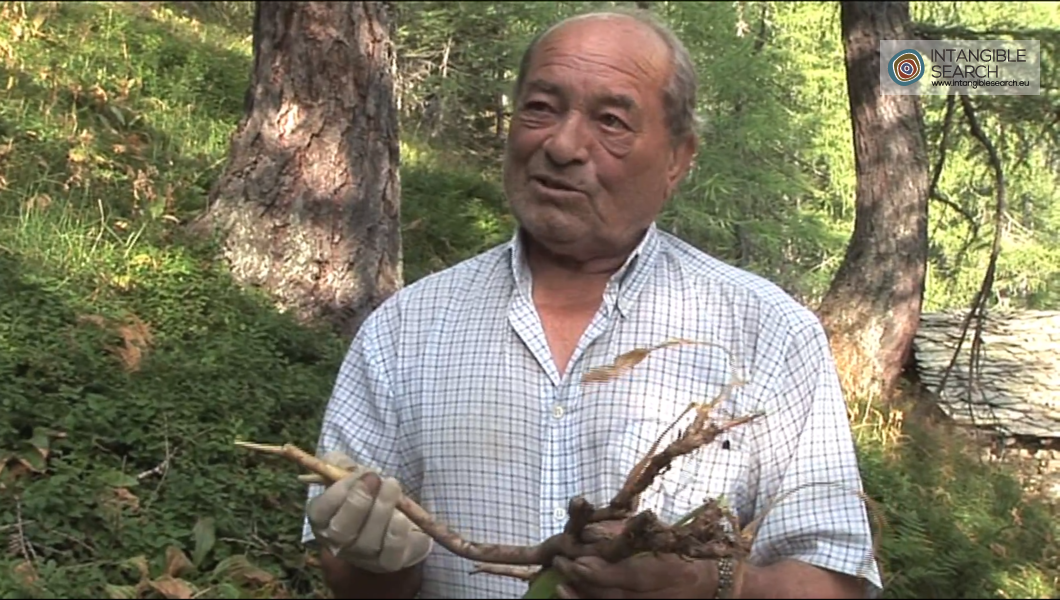
From Community
Tell us about it